
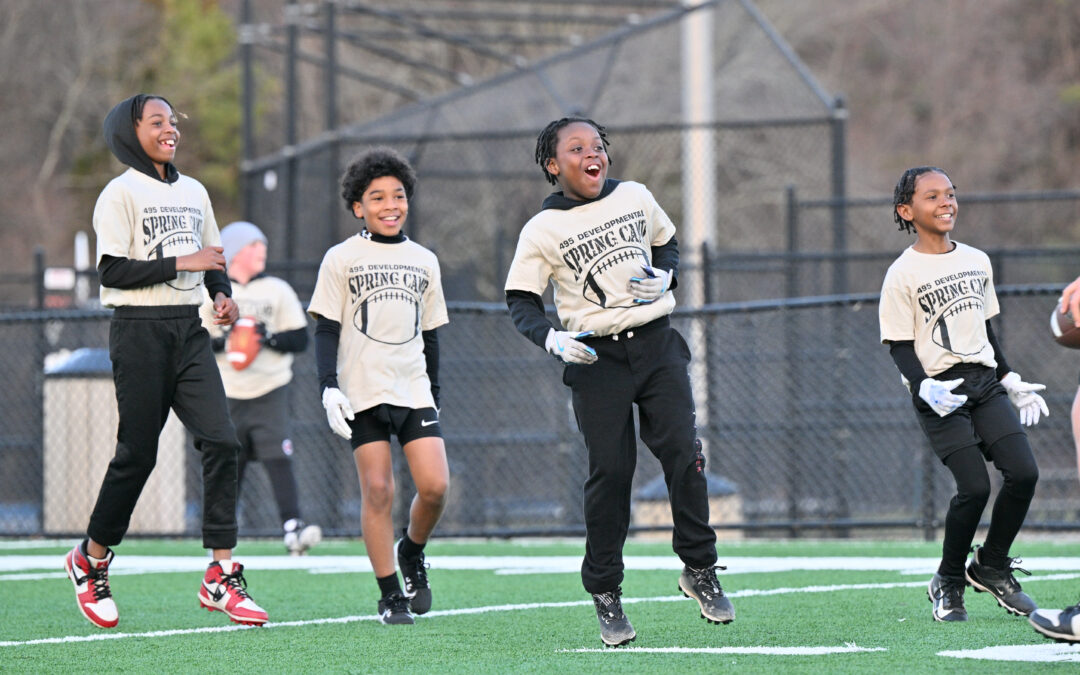
Spring football isn’t about survival.
It’s about development.
The 495 Spring Development Camp was created to address a gap that existed on Long Island long before spring football was widely accepted here: young players needed a structured, intelligent way to get better without burning their bodies out or turning spring into a second fall season.
Long before spring football became common in the New York metro area, the 495 model established what it should actually look like — a development-first environment rooted in technique, football IQ, and long-term growth. That approach mirrors what has existed for decades in the country’s biggest football hotbeds.
This camp isn’t about banging pads.
It’s about building players.
The Purpose of Spring Development
At its core, spring football exists to slow the game down.
The fall season is chaotic — games every weekend, limited practice time, pressure to win. Spring provides something different: space to teach.
At the 495 Spring Development Camp, the emphasis is on:
-
Technical mastery
-
Position-specific fundamentals
-
Situational understanding
-
Repetition without overload
Every drill has a reason. Every install has a purpose.
Quarterbacks: Mechanics, Timing, and Processing
Quarterbacks at the 495 Spring Development Camp focus on the details that separate consistent players from streaky ones.
Work includes:
-
Footwork sequencing from under center and shotgun
-
Drop depth and rhythm tied directly to route concepts
-
Throwing mechanics — base width, hip-shoulder separation, release consistency
-
Coverage identification pre-snap and post-snap
-
Progression timing against common defensive looks
Spring allows quarterbacks to rep throws without the chaos of live pass rush, so mechanics and decision-making can be corrected before bad habits harden.
Running Backs: Vision, Leverage, and Finish
Running back play is about more than speed. In spring, backs learn how to run with intention.
Key areas of focus:
-
Pre-snap alignment and understanding run schemes
-
Read progression on zone, gap, and counter concepts
-
Pad level and contact balance through first contact
-
Pass protection fundamentals — stance, leverage, strike timing
-
Ball security through traffic
Spring reps allow backs to learn how runs are designed to hit — not just where the ball goes.
Wide Receivers: Route Detail and Separation
Spring is where receivers become technicians.
Receivers at the 495 Spring Development Camp work on:
-
Stance and release packages vs press and off coverage
-
Route stem discipline and vertical push
-
Top-of-route mechanics — speed cuts, breaks, body control
-
Spacing and timing within route concepts
-
Hands technique in contested and traffic situations
The goal isn’t highlight catches — it’s consistent separation and precision.
Offensive Line: Footwork Before Force
Spring football is critical for offensive linemen because it allows them to learn without being overpowered by constant contact.
Training focuses on:
-
Stance consistency and balance
-
First step efficiency for run and pass protection
-
Hand placement and independent hands
-
Leverage and pad level
-
Recognition of fronts and blitz indicators
This is where linemen learn to play with their feet and hands — not just their size.
Defensive Line: Get-Off, Hands, and Gap Control
Defensive line work in the spring is about technique and reaction, not collisions.
Areas emphasized:
-
Stance and get-off timing
-
Hand usage and block disengagement
-
Pad level and leverage
-
Gap responsibility and run fits
-
Pass rush fundamentals — angles, counters, containment
Spring reps allow defensive linemen to refine movement patterns that win in the fall.
Linebackers: Reads, Fits, and Communication
Linebackers live in the gray area between run and pass. Spring football is where that understanding develops.
Training includes:
-
Pre-snap alignment and checks
-
Run-pass read progression
-
Proper pursuit angles
-
Block destruction techniques
-
Coverage drops and spacing awareness
Spring teaches linebackers how to think — not just react.
Defensive Backs: Technique Over Talent
Defensive backs benefit immensely from spring development because coverage technique requires repetition.
Work focuses on:
-
Backpedal mechanics and transitions
-
Man coverage footwork and leverage
-
Zone spacing and eye discipline
-
Ball tracking and finishing plays
-
Communication within the secondary
Spring is where defensive backs learn how to stay calm when the ball is in the air.
Why Spring Football Matters — And Why the Model Works
In every major football hotbed — Texas, Florida, Georgia, California — spring football has always been about development.
It’s not about hits.
It’s not about trophies.
It’s about preparing players for the next level of competition.
The 495 Spring Development Camp brought that same model to Long Island early — before it was popular — and proved that young players improve faster when they’re coached with intention.
Spring football, when done correctly, doesn’t wear players down.
It builds them up.
The 495 Spring Development Camp exists to teach football the right way — with detail, discipline, and purpose — so that when fall arrives, players aren’t scrambling to catch up. They’re ready.